
Dec 26–Jan 1
Food for the Kwanzaa karamu in the Skylands
Black-eyed peas, greens and yams for the karamu on the sixth night of Kwanzaa. 1 dish from 1 tradition.
We’re checking this season’s local makers now.
Email me when it opensKwanzaa is a seven-day celebration of African American and Pan-African culture, December 26 to January 1. In 2026 it runs Saturday to Friday, and the karamu, the feast, falls on the sixth night, Thursday, December 31. Each family’s table is its own, built on the food of its ancestors and of the wider African diaspora.
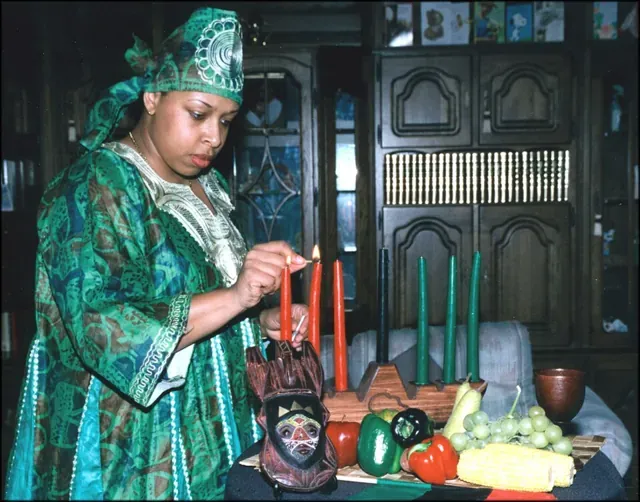
Maulana Karenga created Kwanzaa in 1966 and took its name from the Swahili matunda ya kwanza, first fruits. On the mat sit mazao, the crops, which stand for African harvest celebrations and the rewards of productive and collective labor, and ears of corn, which stand for the children and the future. The corn may also be part of the meal. The kikombe cha umoja, the unity cup, is passed for libations in thanks to the ancestors.
The chef Tanya Holland, speaking to NPR in 2025, described cooking the food of the ancestors around ingredients brought from Africa, like black-eyed peas and okra, and humble, traditional dishes: collard greens, cornbread, yams. She pointed out that tables differ family to family, depending on whether your people came from Mississippi, Virginia, Louisiana or the Carolinas, and ate more rice, potatoes or gumbo.
Holland doesn’t celebrate Kwanzaa herself, but since it draws on African harvest festivals, she suggests cozy, comforting dishes: an oxtail stew with ras el hanout, mushrooms such as maitake cooked like a steak for guests who don’t eat meat, and dishes from across Africa such as Senegal’s chicken yassa, braised with onions and spices. What she won’t make in December is peach cobbler: summer stone fruit has no place on a late-December menu.
African American
1 dish

Questions people ask
What are Kwanzaa's traditional foods?
Kwanzaa menus vary from family to family, often built on the food of the family's ancestors and the wider African diaspora. Common dishes include black-eyed peas, okra, collard greens, cornbread and yams, and some cooks add dishes from across Africa such as Senegal's chicken yassa. Crops and ears of corn sit on the Kwanzaa mat as symbols of the harvest and of children.
What are the 7 days of Kwanzaa in order?
The seven days of Kwanzaa each honor one principle, in this order: Umoja (unity), Kujichagulia (self-determination), Ujima (collective work and responsibility), Ujamaa (cooperative economics), Nia (purpose), Kuumba (creativity) and Imani (faith). They run December 26 to January 1. The karamu feast falls on the sixth day, Kuumba, December 31.
When is the Kwanzaa karamu feast in 2026?
The karamu, the Kwanzaa feast, is on Thursday, December 31, 2026, the sixth night of Kwanzaa. Kwanzaa 2026 runs Saturday, December 26, to Friday, January 1.
What do the crops and corn on the Kwanzaa table mean?
The crops, mazao, stand for African harvest celebrations and the rewards of productive and collective labor, and the ears of corn stand for the children and the future. The name Kwanzaa itself comes from the Swahili matunda ya kwanza, first fruits. The unity cup, kikombe cha umoja, is passed for libations in thanks to the ancestors.
Know who makes one of these? Tell us, and we’ll check it and add it, with credit. Photo credits.