
Nov 30
Cullen skink, haggis and St. Andrew’s Day foods in the Skylands
Scotland’s day: Cullen skink, haggis, neeps and tatties and a dram. 1 dish from 1 tradition.
We’re checking this season’s local makers now.
Email me when it opensSt. Andrew’s Day, November 30, is Scotland’s national day, and in 2026 it falls on a Monday, a bank holiday in Scotland. The usual table is Cullen skink, a smoked haddock soup, then haggis with neeps and tatties, and cranachan to finish, with a dram of whisky alongside.
Historically the day was marked with religious feasts. Now it means dinners at home with friends and family, and larger events put on by Caledonian and St. Andrew’s Societies around the world. In Scotland it also opens the winter festival season.
Cullen skink comes from Cullen, a town on the Moray coast of northeast Scotland, where fishermen are thought to have made it from their haddock catch. It is at least smoked haddock, potatoes and onions, and the traditional recipe uses milk. An authentic one uses finnan haddie, though any undyed smoked haddock will do. Skink was a Scots word for a shin of beef before it came to mean soup.
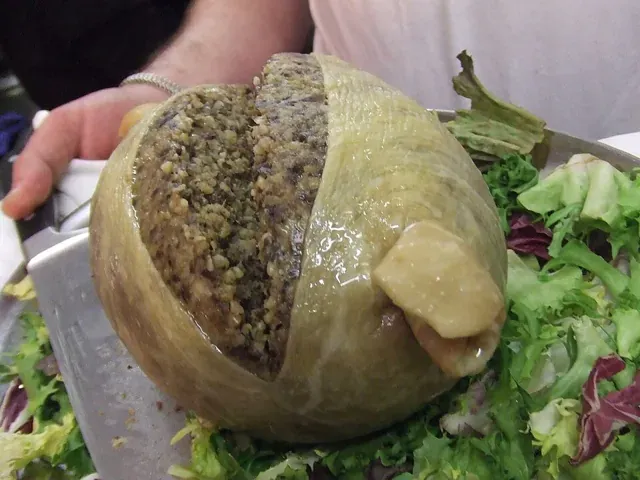
On St. Andrew’s Day the haggis comes with mashed potatoes and turnips and often a whisky sauce. Cranachan is a dessert of cream, oatmeal and whisky. Vegetarian haggis is fast becoming a staple, and newer dishes have joined the menu too, such as haggis pakora. Shortbread, usually one part sugar, two parts butter and three to four parts flour, is most closely tied to Christmas and Hogmanay in Scotland, the season this day begins.
Scottish
1 dish
Order ahead

Questions people ask
What is traditionally eaten on St Andrew's Day?
The usual St. Andrew's Day table is Cullen skink, a smoked haddock soup, then haggis with neeps and tatties, and cranachan to finish, with a dram of whisky alongside. The haggis often comes with a whisky sauce, and vegetarian haggis is fast becoming a staple. St. Andrew's Day 2026 is Monday, November 30.
What are some traditional Scottish food dishes to try?
Start with haggis, neeps and tatties, Cullen skink and cranachan, a dessert of cream, oatmeal and whisky. Shortbread, usually one part sugar, two parts butter and three to four parts flour, is the classic Scottish bake of Christmas and Hogmanay. Newer dishes such as haggis pakora have joined the menu too.
What are some of the most popular traditions celebrated on St. Andrew's Day in Scotland?
Today St. Andrew's Day mostly means dinners at home with friends and family, plus larger dinners held by Caledonian and St. Andrew's Societies around the world. It is Scotland's national day and a bank holiday there, though still a working day for many, and it opens Scotland's season of winter festivals, which runs through Hogmanay to Burns Night. Historically the day was marked with religious feasts.
What is Cullen skink?
Cullen skink is a thick Scottish soup of smoked haddock, potatoes and onions, often made with milk or a little cream. It comes from Cullen, a town on the Moray coast of northeast Scotland, and an authentic one uses finnan haddie, though any undyed smoked haddock will do. Skink was a Scots word for a shin of beef before it came to mean soup.
Know who makes one of these? Tell us, and we’ll check it and add it, with credit. Photo credits.